Space science
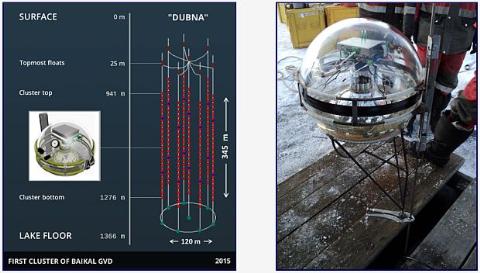
Russia dropped the telescope into Lake Baikal, discovered dark matter
Russian scientists released the device into Lake Baikal in hopes of shedding light on the nature of dark matter and the origin of the universe.
Browse ScienceInfo articles and explainers related to Speed Of Light.
48 published items.
Russian scientists released the device into Lake Baikal in hopes of shedding light on the nature of dark matter and the origin of the universe.
For the first time astronomers have measured the rotation speed of a supermassive black hole, and it rotates at nearly the speed of light.

If a spaceship flies near the speed of light, it will be a death ship for the crew and the ship itself will be destroyed, an article published in New Scientist Magazine…

The Lunar Reconaissance Orbiter (LRO) probe from NASA has for the first time captured images of the dark side of the Moon with a resolution 100 times higher than ...

According to world-leading physicist Stephen Hawking, one day humans can build spacecraft with a speed near the speed of light ...

You only need to count the number of seconds between the process of seeing the lightning and the thunderbolt and then dividing that number by 5. The results will show ho…
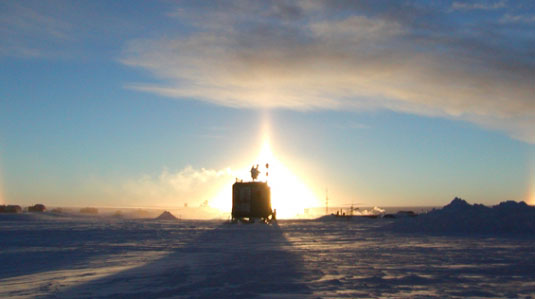
This observatory, IceCube, was built from a giant block of ice in the southern tip of Antarctica, to detect neutrinos - a type of particle that is thought to be mystical…

On September 22, scientists from the European Center for Atomic Research (CERN) shocked the world physics village when they announced they had detected neutrino molecula…

For the first time, physicists have successfully designed chips

Airbus has recently been approved by a US Patent and Trademark Office
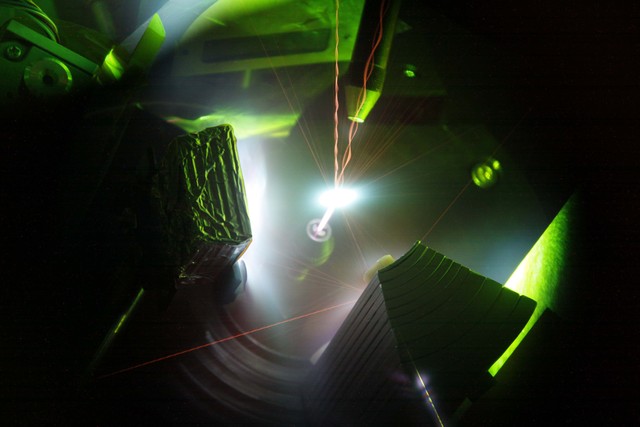
Scientists at the Las Alamos National Laboratory have made a surprising announcement when they successfully bombarded metal sheets to create a hot plasma from a 200-mill…

For the first time, scientists have slowed down the speed of light - particles called photons - as it passes through an empty environment, according to a new study.

Physicists at the University of Adelaide have announced that they have made the most accurate thermometer ever.

Last year, physicists surprised the world by announcing neutrinos could move at a faster rate than light.